How a cash home sale works in Ontario, step by step
By Elena Nair, Lead Editor · Updated 2026-10-20
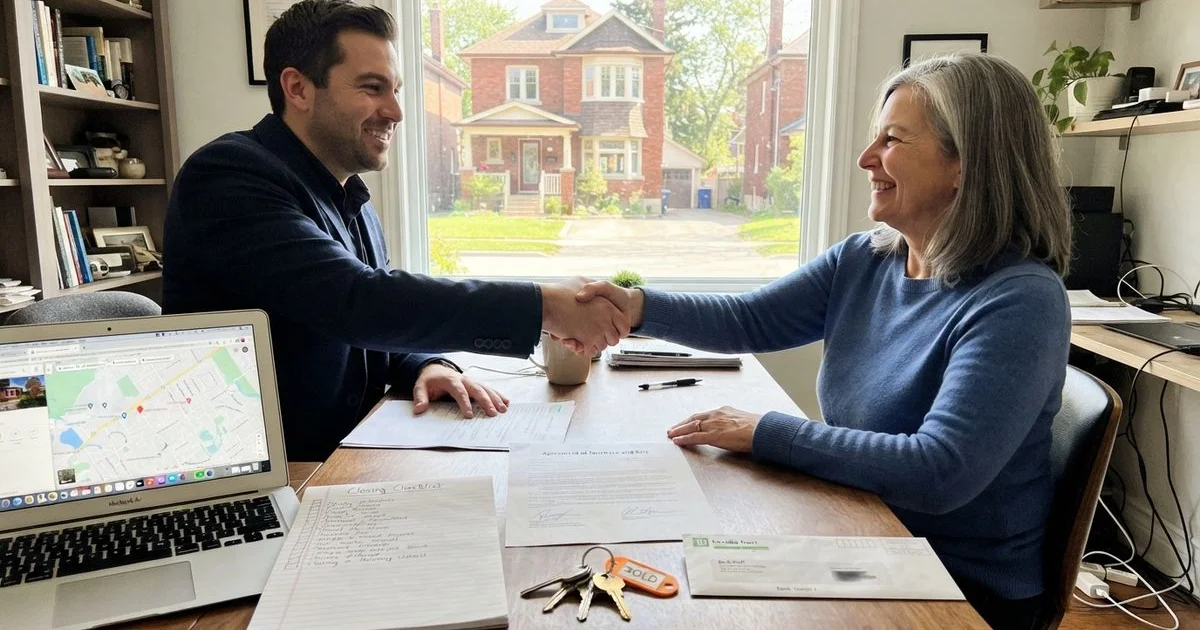
A cash sale removes one big moving part: the buyer’s mortgage approval. Everything else in an Ontario home sale still happens. This guide walks through the sequence so you know what is normal and what deserves a second look. This is general information, not legal or financial advice, and a real estate lawyer should review anything you sign.
The usual sequence
Most sales follow the same path, whether the buyer is a company, an investor, or a local family with savings.
- First contact. You describe the property: address, condition, whether anyone lives there, and any mortgage or liens on title.
- Viewing or photos. The buyer looks at the home in person or by video. Expect questions about the roof, furnace, wiring, plumbing and foundation.
- Written offer. A real offer is in writing, names the price, the deposit, the closing date and every condition.
- Agreement of purchase and sale. If you accept, both sides sign. Your lawyer should read it before you do.
- Title search and paperwork. Lawyers check ownership, liens and taxes owing, then prepare the transfer.
- Closing. Funds move through the lawyer’s trust account, ownership transfers, and you hand over keys.
If you want to compare firms that advertise quick closings, cash buyers focused on fast closing offers are grouped in one place on this site.
Who does what
| Step | Seller | Buyer | Lawyers |
|---|---|---|---|
| Offer | Reviews price and conditions | Presents written terms | Not yet involved |
| Agreement | Signs if terms are acceptable | Pays the deposit | Review the document |
| Title work | Provides ID and mortgage details | Waits for clear title | Run the title search |
| Closing | Moves out, hands over keys | Sends the balance | Register the transfer, release funds |
What “fast” really depends on
A cash buyer can skip the lender, but speed still depends on things neither side fully controls. Reviewers of cash buyers in our data most often describe a process that felt smooth when the buyer explained each step clearly and answered questions quickly. That is their experience, not a promise about your sale.
Common reasons a closing slows down:
- A mortgage on the property needs a discharge statement from your lender.
- Property tax arrears or a lien must be cleared before title can pass.
- The seller is an estate trustee still waiting on court paperwork.
- A tenant is in place and the buyer needs to know whether they stay.
Several of these have their own guides on this site, because the right move differs by situation.
What to ask before you sign
- Is the offer unconditional, or does it depend on an inspection?
- How large is the deposit, and where is it held?
- Who pays the legal fees on each side?
- What happens to the deposit if the buyer backs out?
- Is the closing date firm, and can it be moved if you need more time?
What a trustworthy process looks like
You should never be asked to pay an upfront fee to receive an offer. You should never be pushed to sign the same day without time to call a lawyer. And you should be able to see who the buyer is, including a company name and a way to reach them. Our methodology page explains what we check before listing a business.
Where to start
Gather your mortgage statement, a recent property tax bill and any title documents. Then you can describe your situation accurately and spot offers that skip over the details. For more on how the directory is organised, start at the home page.
Questions people ask
- Do I still need a lawyer if the buyer pays cash?
- Yes. In Ontario a real estate lawyer handles title, the closing documents and the transfer of funds on every sale, cash or mortgage. Cash only removes the lender's conditions.
- Is a cash offer binding once I accept it?
- Once both sides sign an agreement of purchase and sale it is a binding contract. Read any conditions first, because some cash buyers still add an inspection or a title condition.
- Can I choose my own closing date?
- Usually you can propose one. Cash buyers often accept a short closing, and some will wait if you need time to move. Get the date written into the agreement.
- What if the buyer's offer changes after their inspection?
- That can happen when a visit turns up repairs they did not expect. You can negotiate, accept, or walk away if no signed agreement is in place yet.